Tag: Small business websites

  • Why SEO matters for Cork businesses

    Why SEO matters for Cork businesses

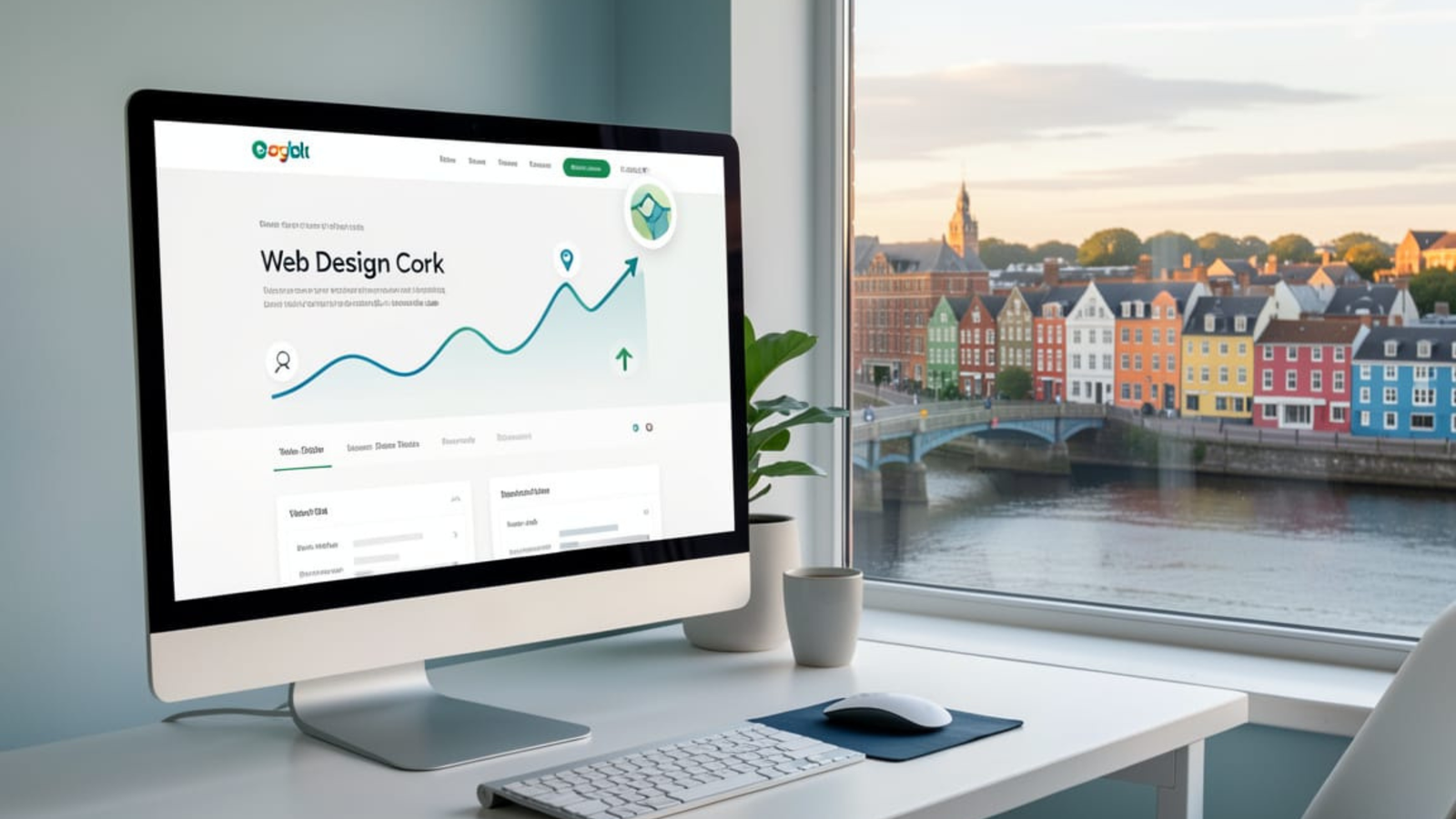
    Do Cork businesses need SEO? Yes—and if you offer Web Design Cork services, a strong SEO strategy is one of the fastest ways to get in front of ready-to-buy local customers.

    Why SEO matters for Cork businesses

    Cork consumers are searching online first, whether they need a plumber in Douglas, a café in Ballincollig, or a web designer in the city centre. Local SEO helps those businesses appear in Google’s organic results and the Map Pack when people search nearby. Nearly half of all Google searches have local intent, which means ranking well for Cork-focused terms directly affects enquiries, calls, and foot traffic.

    Local SEO also builds long-term visibility. Once your site is optimised and starts ranking, you can receive consistent organic traffic without paying for every single click like you would with ads. For small and medium-sized businesses in Cork, this can be the difference between relying on word of mouth and having a predictable pipeline of leads from search.

    Web design and SEO are tightly connected: a site that looks great but cannot be found in Google will not generate business. Modern Web Design Cork projects increasingly bake in SEO from the ground up, including fast load speeds, mobile responsiveness, clean code, and logical site structure. Agencies in Cork highlight that they build SEO-ready websites because it directly improves local visibility and increases enquiries from search.

    A custom website also makes it easier to implement on-page SEO best practices. That includes proper heading hierarchies, optimised title tags, persuasive meta descriptions, and content written around phrases such as “Web Design Cork” and related local keywords. Combined with strong UX—clear navigation, engaging layouts, and intuitive calls to action—this helps turn visitors from Google into leads and paying clients.

    Top benefits of SEO for Cork businesses

    Here are practical advantages Cork businesses see when they invest in SEO and quality web design:

    • Increased local visibility: Optimising for Cork-specific keywords and neighbourhood terms puts your business in front of people actively searching in your area.
    • Higher-quality traffic: SEO targets people who are already looking for your services, which means better conversion rates than broad, untargeted advertising.
    • More calls and enquiries: Local SEO (website + Google Business Profile) drives phone calls, contact form submissions, and shop visits from nearby customers.
    • Competitive edge in Cork: Appearing above local competitors in search results builds trust and authority, positioning your brand as the obvious choice.
    • Better return on investment: Compared with ongoing ad spend, organic rankings can keep generating traffic and leads for months or years with modest maintenance.
    • Stronger brand presence: Regular content creation, link building, and consistent NAP (Name, Address, Phone) details across directories reinforce your reputation locally.

    An example from Cork: businesses that invested in redesigning their website and aligning it with SEO saw a steady rise in organic visits and enquiries after launch, showing how design and optimisation working together directly impacts sales.

    Ranking your own Web Design Cork site

    If your goal is to rank your own site for “Web Design Cork”, you need to treat your business like your best client and apply a complete local SEO strategy.

    On-page optimisation for “Web Design Cork”

    Focus key pages of your site around your primary keyword and its close variants.

    • Use “Web Design Cork” in your homepage H1 and in at least one major service page heading, in a natural, human-readable way.
    • Craft a title tag such as “Web Design Cork – Custom, SEO-Friendly Websites for Local Businesses” and a compelling meta description that mentions Cork and your value proposition.
    • Write in-depth, helpful content about your services, process, and results for Cork clients, weaving in phrases like “professional web design Cork”, “SEO-friendly web development in Cork”, and “local business websites in Cork”.
    • Add dedicated service and location pages, for example “Web Design Cork City”, “Ecommerce Web Design Cork”, or “Small Business Web Design in Cork”, each with unique content.
    • Ensure fast loading times, responsive design, and clear internal linking, as these technical and UX factors contribute to better rankings and user engagement.

    Local SEO & Google Business Profile

    Google’s Map Pack is prime real estate for “Web Design Cork” searches, so you must signal to Google that you are a Cork-based provider.

    • Create and fully optimise your Google Business Profile with your Cork address, phone number, website URL, and accurate categories like “Website designer”.
    • Use “Web Design Cork” and related phrases in your business description and posts while keeping the copy natural.
    • Collect genuine reviews from local clients that mention Cork and your web design work where appropriate. Reviews influence both map rankings and click-through rates.
    • Ensure consistent NAP details across directories (e.g., local business listings, Irish industry sites, regional chambers).

    This combination of website optimisation and local signals tells Google you are highly relevant for Cork web design searches.

    Building authority with Cork-focused content and links

    Authority is a major ranking factor, especially in competitive niches like web design.

    • Publish regular blog posts answering questions Cork businesses actually ask about websites and SEO, such as “How much does web design cost in Cork?” or “Why Cork businesses need SEO-ready web design”.
    • Create case studies featuring local clients, highlighting tangible results (more traffic, enquiries, or bookings) from your web design and SEO work.
    • Earn backlinks from local sites: sponsor Cork events, partner with local agencies, contribute guest posts to Cork business blogs, or get featured in local media and directories.
    • Engage on social and local communities, then link back to relevant resources on your site (guides, checklists, or portfolio pieces for Cork businesses).

    Over time, these signals show search engines that your site is an authority on Web Design Cork, which strengthens your rankings for that and related keywords.

    When should a Cork business invest in SEO?

    Most Cork businesses should consider SEO when they:

    • Rely on local customers who search online before making a purchase.
    • Have a website that is not generating enquiries, despite looking good.
    • Compete in a crowded local market and need a sustainable way to stand out.
    • Want long-term growth rather than short, one-off campaigns.

    For a web design provider in Cork, SEO is not optional—it is a core part of how you attract clients and demonstrate your expertise. By optimising your site around “Web Design Cork”, investing in strong local signals, and building authority with Cork-focused content, you position your business where it matters most: in front of local companies actively searching for the services you offer.

    Ready to Upgrade Your Website for 2026?

    If you want a faster, cleaner, more modern website built for performance and long-term growth, I can help you design and build a future-proof system tailored to your business.

    👉 Send me a message or request a free consultation today.

  • The Real Cost of Not Upgrading Your Website in 2026

    The Real Cost of Not Upgrading Your Website in 2026

    Every year, technology moves forward, and the expectations placed on your website move with it. In 2026, customers expect faster load times, cleaner interfaces, stronger security, and an overall digital experience that feels modern and effortless. Unfortunately, many businesses still rely on websites built years ago — sites that may look “fine” on the surface but struggle behind the scenes.

    What most business owners don’t realise is that not upgrading your website comes with real costs. Some of these costs are financial, some are hidden, and others only become noticeable when you compare your website to competitors who have moved forward.

    This isn’t about chasing trends. It’s about staying functional, competitive, and trustworthy in a digital world that expects more every year. So, let’s explore the true cost of sticking with an outdated website — and why upgrading in 2026 isn’t optional anymore.


    The Hidden Decline of an Outdated Website

    Websites rarely fail overnight. Instead, they decline slowly. A few minor issues pile up. A plugin breaks. A page loads a little slower. A design element stops behaving correctly on mobile. At first, these problems feel small — easy to ignore. But over time, they compound, affecting everything from performance to conversions.

    An outdated website doesn’t just look old. It functions old. And customers notice the moment they land on your page. If your site feels sluggish, confusing, or unstable, visitors assume your business operates the same way.

    The longer a website goes without an upgrade, the more hidden problems it silently creates.


    Cost #1: Lost Sales and Conversions

    The biggest cost of an outdated website is lost revenue. When your site feels slow, outdated, or difficult to navigate, visitors leave before taking action. They don’t fill out your forms, don’t buy your products, and don’t trust your offers.

    Even if your business has strong word-of-mouth or loyal customers, new visitors judge you instantly. They compare you to modern competitors without even thinking about it. If your website doesn’t match their expectations, you lose the sale long before you ever had the chance to win it.

    A modern site, on the other hand, builds trust instantly. And trust is the foundation of every conversion.


    Cost #2: Poor SEO Performance and Declining Visibility

    Google continually updates its algorithms to reward websites that load quickly, perform smoothly, and offer strong user experiences. In 2026, Core Web Vitals, security, mobile optimisation, and structured data matter more than ever.

    An outdated website often struggles in all of these areas. Slow loading times, messy code, missing schema, and unoptimised content prevent your site from ranking — even if your business deserves visibility.

    What’s worse is that SEO decline happens quietly. You may not notice the drop until your traffic is already shrinking. By then, reclaiming your ranking becomes much harder and far more expensive.


    Cost #3: Increased Maintenance, Downtime, and Technical Issues

    Older websites require more attention, not less. Plugins conflict, themes break, and outdated code creates headaches that your developer must constantly patch. Each fix takes time. Each update introduces new problems. Eventually, you spend more maintaining the old system than you would rebuilding a modern one.

    The problem isn’t just cost — it’s reliability. A single outdated script can break checkout functionality. A vulnerable plugin can expose your website to security risks. And a dated hosting setup can cause random outages that customers never tolerate.

    A modern website, especially one built on performance-first technologies like Next.js + headless WordPress, is more stable, more secure, and far easier to maintain.


    Cost #4: Damage to Brand Credibility

    Your website is the digital face of your business. It demonstrates your professionalism, your attention to detail, and your ability to deliver a modern experience.

    When someone lands on an outdated site, they subconsciously question your credibility:

    • Is this business still active?
    • Do they keep things up to date?
    • Can I trust them with my money?
    • If their website is outdated, what else is outdated?

    A modern website communicates the opposite. It tells customers you care about quality, security, and user experience. It shows that your business is evolving — and worth investing in.


    Cost #5: Falling Behind Competitors Who Do Upgrade

    Your competitors aren’t standing still. Many businesses are investing in faster, cleaner, more modern websites because they understand what’s at stake. They know performance influences everything: search rankings, conversions, user satisfaction, and long-term loyalty.

    If your competitors have already upgraded and you haven’t, the gap between you grows every year. And in 2026, that gap is becoming more visible than ever.

    Even a small competitor with a better digital experience can outperform a larger, more established business online.


    Cost #6: Missing Out on Modern Features and Opportunities

    As technology evolves, so do the possibilities. Modern websites:

    • load instantly
    • support app-like experiences
    • integrate with advanced analytics
    • connect to CRM systems
    • offer one-tap checkout
    • use personalised content
    • implement intelligent UX patterns
    • scale quickly without breaking

    Older websites simply can’t compete with this level of capability. By delaying an upgrade, businesses limit their potential — often without realising it.


    When It’s Time to Upgrade

    Not every website needs a full rebuild, but if yours suffers from one or more of these problems:

    • slow loading
    • unstable pages
    • outdated design
    • poor mobile experience
    • declining SEO
    • constant bugs
    • plugin conflicts

    …then an upgrade isn’t just beneficial — it’s necessary.

    The goal isn’t to redesign for the sake of appearance. It’s to modernise the infrastructure so your website performs consistently and supports your business growth.


    Final Thoughts

    The real cost of not upgrading your website isn’t just the price of missed opportunities. It’s the slow, steady damage to your brand, your visibility, and your revenue. In 2026, a modern website is no longer a luxury — it’s a core part of doing business.

    If your website is holding you back, upgrading now can save you time, money, and frustration in the long run. And more importantly, it can help your business compete confidently in a digital landscape that keeps evolving.


    Ready to Upgrade Your Website for 2026?

    If you want a faster, cleaner, more modern website built for performance and long-term growth, I can help you design and build a future-proof system tailored to your business.

    👉 Send me a message or request a free consultation today.

  • The Small Business Guide to Building an Online Presence That Actually Works

    The Small Business Guide to Building an Online Presence That Actually Works

    For small businesses, the online world can feel overwhelming. You’re told you need a website, a brand, social media, SEO, content, advertising — the list goes on. And while each of these elements matters, the truth is that most small businesses don’t need everything. What they really need is a simple, focused online presence that feels professional, performs reliably, and helps customers clearly understand what they offer.

    The challenge is that many business owners assume a website alone is enough. They build something quick, put it online, and hope it attracts customers. When it doesn’t, they often blame marketing, budget, or visibility. In reality, the issue usually comes down to structure: their online presence isn’t set up in a way that actually works for modern customers.

    This guide breaks down what small businesses really need — and what they don’t — to create an online presence that consistently brings in customers and supports long-term growth.


    Why Your Online Presence Matters More Than Ever

    The first place people go when they discover your business — whether through word of mouth, Google, or social media — is your website. From there, they form an immediate impression. If your online presence is confusing, cluttered, outdated, or slow, customers assume your business is too. And if your website can’t answer their questions quickly, they simply move on.

    Today’s customers expect clarity. They want to know who you are, what you do, and how you can help them — all within seconds. When your online presence communicates this clearly, your business instantly becomes more trustworthy and more attractive.


    The Foundation of an Effective Online Presence

    A strong online presence doesn’t start with trends. It starts with essentials. These are the elements that make the biggest difference and give customers confidence in your business.

    1. A fast, modern, reliable website

    Your website is your online headquarters. However, it must do more than simply exist. It should load quickly, look clean, and work perfectly on all devices. A slow or outdated site immediately weakens trust.

    A modern site doesn’t have to be complicated — it simply needs to feel professional, stable, and easy to navigate. When your website performs well, every visitor has a smoother experience, which ultimately leads to more enquiries, more bookings, or more sales.

    2. Clear messaging that explains your value

    Most small-business websites struggle not because of design, but because visitors don’t understand what the business actually does. Strong messaging makes your offer obvious. Customers shouldn’t have to dig for answers. Your homepage should clearly explain:

    • who you are
    • what problem you solve
    • who you help
    • why you’re different
    • how they can get started

    When customers understand the value instantly, they stay longer — and convert more often.

    3. Consistent branding across every platform

    Your brand is more than a logo. It includes your colours, typography, imagery, tone of voice, and the overall feeling people associate with your business. When these elements look consistent across your website, social media, business cards, and marketing, your business feels trustworthy and intentional.

    Consistency builds recognition, and recognition builds credibility.

    4. Strong local or niche-specific SEO

    For small businesses, SEO isn’t about ranking for every keyword — it’s about ranking for the right ones. That means focusing on:

    • local searches
    • niche terms
    • service-specific queries
    • long-tail keywords your customers actually use

    When your website is structured well and optimised properly, customers searching for your services will find you organically — without paying for ads.

    5. Social channels that support (not replace) your website

    Small businesses often feel pressured to be everywhere: Instagram, TikTok, Facebook, LinkedIn, YouTube. But you don’t need all of them. You only need the platforms your customers actually use.

    A well-maintained website supported by one or two active social channels is far more effective than spreading yourself thin.


    The Most Common Mistakes Small Businesses Make

    Even with the best intentions, many small businesses unintentionally sabotage their online presence. The problems usually come down to a few predictable patterns:

    Outdated websites

    A website from five years ago may still “look okay,” but it likely doesn’t perform well, especially on mobile. Customers judge your business on the quality of your digital experience.

    Too much focus on design, not enough on performance

    Beautiful sites that load slowly or feel clunky will always lose customers to simpler, faster alternatives.

    Inconsistent branding

    Different fonts, colours, and styles across platforms confuse customers and weaken brand identity.

    Poor website structure

    Without clear navigation, call-to-actions, or messaging, even a visually appealing site fails to guide visitors where they need to go.

    Relying only on social media

    Social platforms can change overnight. Your website is the only digital asset you truly own.

    Recognising these issues is the first step. Fixing them creates a strong foundation that works consistently — even when you’re not actively promoting your business.


    What a High-Performing Online Presence Actually Looks Like

    When everything is aligned, your online presence begins to work for you. Customers find you naturally, understand what you offer, and feel confident contacting or buying from you. A high-performing online presence typically includes:

    • A fast, modern website built for mobile and speed
    • Professional, consistent branding
    • Clear, confident messaging
    • Strong SEO foundations
    • Social channels that direct traffic back to your site
    • A checkout or enquiry process that feels effortless
    • A content strategy that builds trust over time

    When these elements come together, online growth becomes predictable — not accidental.


    When You Should Consider Upgrading Your Online Presence

    If you’re unsure whether your existing setup is holding you back, ask yourself:

    • Does your website feel slow or outdated?
    • Are you getting fewer enquiries or sales than expected?
    • Do customers struggle to understand what you offer?
    • Do you feel embarrassed directing people to your website?
    • Is your branding inconsistent or unclear?
    • Are you relying too heavily on social media?

    If any of these sound familiar, it may be time to modernise your online presence — before it begins to impact revenue, visibility, or customer perception.


    Final Thoughts

    A strong online presence isn’t about doing everything. It’s about doing the right things well. When your website, branding, messaging, and visibility all support each other, your business becomes more trustworthy, more discoverable, and more competitive.

    For small businesses, these improvements don’t just help you look professional — they help you win more customers, build stronger relationships, and grow with confidence.


    Ready to Build an Online Presence That Actually Works?

    If you want a high-performing online presence built for speed, clarity, and long-term results, I can help you create a modern website, stronger branding, and a strategy that supports your business.

    👉 Send me a message or request a free consultation today.